Stealing Your Mind as You Look at Your Phone Art
W hen he was nine years erstwhile, my godson Adam adult a brief merely freakishly intense obsession with Elvis Presley. He took to singing Jailhouse Rock at the tiptop of his phonation with all the depression crooning and pelvis-jiggling of the Male monarch himself. One day, as I tucked him in, he looked at me very earnestly and asked: "Johann, volition you take me to Graceland one 24-hour interval?" Without really thinking, I agreed. I never gave it another thought, until everything had gone incorrect.
X years later on, Adam was lost. He had dropped out of schoolhouse when he was 15, and he spent almost all his waking hours alternating blankly between screens – a blur of YouTube, WhatsApp and porn. (I've changed his proper noun and some small-scale details to preserve his privacy.) He seemed to be whirring at the speed of Snapchat, and nothing even so or serious could gain any traction in his mind. During the decade in which Adam had become a man, this fracturing seemed to be happening to many of united states of america. Our ability to pay attending was cracking and breaking. I had just turned forty, and wherever my generation gathered, we would lament our lost capacity for concentration. I nonetheless read a lot of books, but with each year that passed, it felt more and more like running upwards a down escalator. Then ane evening, every bit we lay on my sofa, each staring at our own ceaselessly shrieking screens, I looked at him and felt a depression dread. "Adam," I said softly, "let's go to Graceland." I reminded him of the promise I had made. I could meet that the idea of breaking this numbing routine ignited something in him, just I told him there was 1 condition he had to stick to if we went. He had to switch his phone off during the 24-hour interval. He swore he would.
When you arrive at the gates of Graceland, there is no longer a human whose job is to evidence you around. You are handed an iPad, you put in little earbuds, and the iPad tells you what to exercise – plough left; plough correct; walk forward. In each room, a photo of where you lot are appears on the screen, while a narrator describes it. So as we walked around nosotros were surrounded by bare-faced people, looking almost all the time at their screens. Equally we walked, I felt more and more tense. When we got to the jungle room – Elvis'due south favourite place in the mansion – the iPad was chattering abroad when a eye-aged homo standing side by side to me turned to say something to his wife. In front of u.s., I could see the large fake plants that Elvis had bought to plow this room into his ain artificial jungle. "Honey," he said, "this is astonishing. Look." He waved the iPad in her direction, and began to motion his finger across it. "If yous swipe left, you can meet the jungle room to the left. And if yous swipe right, you can see the jungle room to the right."
His wife stared, smiled, and began to swipe at her own iPad. I leaned frontward. "Simply, sir," I said, "in that location'due south an erstwhile-fashioned grade of swiping you tin can do. It'south called turning your head. Because we're here. We're in the jungle room. Yous can see information technology unmediated. Here. Look." I waved my hand, and the fake green leaves rustled a little. Their eyes returned to their screens. "Look!" I said. "Don't you see? We're actually there. There'due south no need for your screen. We are in the jungle room." They hurried away. I turned to Adam, ready to laugh about it all – merely he was in a corner, holding his phone under his jacket, flicking through Snapchat.
At every stage in the trip, he had broken his promise. When the plane starting time touched down in New Orleans two weeks before, he took out his phone while we were nevertheless in our seats. "You promised not to employ it," I said. He replied: "I meant I wouldn't make telephone calls. I can't not use Snapchat and texting, obviously." He said this with baffled honesty, as though I had asked him to concur his breath for 10 days. In the jungle room, I all of a sudden snapped and tried to wrestle his phone from his grasp, and he stomped away. That night I found him in the Heartbreak Hotel, sitting side by side to a swimming pool (shaped like a behemothic guitar), looking sad. I realised as I sat with him that, equally with so much anger, my rage towards him was actually anger towards myself. His inability to focus was something I felt happening to me too. I was losing my power to be present, and I hated it. "I know something's wrong," Adam said, belongings his phone tightly in his manus. "But I accept no thought how to set information technology." And then he went dorsum to texting.
I realised then that I needed to understand what was really happening to him and to so many of us. That moment turned out to be the offset of a journey that transformed how I think about attending. I travelled all over the earth in the next three years, from Miami to Moscow to Melbourne, interviewing the leading experts in the world about focus. What I learned persuaded me that we are not now facing only a normal anxiety most attention, of the kind every generation goes through as information technology ages. Nosotros are living in a serious attending crisis – one with huge implications for how nosotros live. I learned at that place are twelve factors that accept been proven to reduce people's power to pay attention and that many of these factors accept been ascent in the past few decades – sometimes dramatically.
I went to Portland, Oregon, to interview Prof Joel Nigg, who is 1 of the leading experts in the world on children'southward attention issues, and he told me nosotros demand to enquire if nosotros are now developing "an attentional pathogenic culture" – an environment in which sustained and deep focus is harder for all of u.s.a.. When I asked him what he would do if he was in charge of our culture and he actually wanted to destroy people's attending, he said: "Probably what our society is doing." Prof Barbara Demeneix, a leading French scientist who has studied some key factors that can disrupt attention – she is an expert on the furnishings of chemical pollution – told me frankly: "At that place is no way we can have a normal encephalon today." We can see the furnishings all effectually us. A small-scale report of higher students found they now but focus on any one chore for 65 seconds. A dissimilar study of office workers institute they only focus on average for three minutes. This isn't happening because we all individually became weak-willed. Your focus didn't collapse. It was stolen.
W hen I first got back from Graceland, I idea my attention was failing because I wasn't strong enough as an individual and because I had been taken over past my phone. I went into a screw of negative thoughts, reproaching myself. I'd say – y'all're weak, you're lazy, you're non disciplined plenty. I idea the solution was obvious: exist more disciplined, and banish your telephone. So I went online and booked myself a little room by the beach in Provincetown, at the tip of Greatcoat Cod. I appear triumphantly to everyone – I am going to be there for three months, with no smartphone, and no calculator that can get online. I'm done. I'g tired of beingness wired. I knew I could only do it because I was very lucky and had money from my previous books. I knew it couldn't be a long-term solution. I did information technology because I thought that if I didn't, I might lose some crucial aspects of my ability to think deeply. I also hoped that if I stripped everything dorsum for a time, I might outset to be able to glimpse the changes we could all make in a more sustainable way.
In my first webless week, I stumbled effectually in a brume of decompression. Provincetown is a little gay resort town with the highest proportion of same-sexual practice couples in the US. I ate cupcakes, read books, talked with strangers and sang songs. Everything radically slowed down. Ordinarily I follow the news every hour or so, getting a drip-feed of anxiety-provoking facts and trying to smush them together into some kind of sense. Instead, I but read a physical paper once a mean solar day. Every few hours, I would feel an unfamiliar sensation gurgling inside me and I would enquire myself: what is that? Ah, yep. Calm.
Later, I realised when I interviewed the experts and studied their research that there were many reasons why my attention was starting to heal from that first day. Prof Earl Miller, a neuroscientist at Massachusetts Institute of Technology, explained i to me. He said "your brain tin merely produce one or two thoughts" in your conscious listen at once. That's it. "We're very, very single-minded." We have "very express cognitive chapters". Only nosotros have fallen for an enormous delusion. The boilerplate teenager at present believes they tin can follow half-dozen forms of media at the same time. When neuroscientists studied this, they found that when people believe they are doing several things at one time, they are actually juggling. "They're switching back and forth. They don't detect the switching because their brain sort of papers it over to give a seamless experience of consciousness, but what they're really doing is switching and reconfiguring their brain moment-to-moment, chore-to-chore – [and] that comes with a toll." Imagine, say, you lot are doing your tax render, and y'all receive a text, and you lot look at information technology – it'south merely a glance, taking three seconds – and then you go back to your tax return. In that moment, "your brain has to reconfigure, when it goes from one task to another", he said. You accept to remember what you were doing earlier, and y'all take to remember what yous idea about information technology. When this happens, the evidence shows that "your performance drops. You're slower. All as a upshot of the switching."
This is called the "switch-cost event". It means that if y'all check your texts while trying to piece of work, y'all aren't just losing the lilliputian bursts of time yous spend looking at the texts themselves – you are as well losing the time it takes to refocus subsequently, which turns out to be a huge corporeality. For example, 1 study at the Carnegie Mellon University's human computer interaction lab took 136 students and got them to sit down a test. Some of them had to have their phones switched off, and others had their phones on and received intermittent text messages. The students who received messages performed, on boilerplate, 20% worse. It seems to me that near all of the states are currently losing that 20% of our brainpower, well-nigh all the time. Miller told me that equally a issue we now live in "a perfect storm of cognitive degradation".
For the first time in a very long time, in Provincetown I was doing one thing at a fourth dimension, without beingness interrupted. I was living within the limits of what my brain could actually handle. I felt my attention growing and improving with every day that passed, just then, one solar day, I experienced an precipitous setback. I was walking down the beach and every few steps I saw the same affair that had been scratching at me since Memphis. People seemed to be using Provincetown simply equally a properties for selfies, rarely looking up, at the bounding main or each other. Just this time, the crawling I felt wasn't to yell: Yous're wasting your lives, put the damn phone downward. It was to yell: Requite me that phone! Mine! For so long, I had received the thin, insistent signals of the web every few hours throughout the day, the trickle of likes and comments that say: I come across you lot. You matter. At present they were gone. Simone de Beauvoir said that when she became an atheist, information technology felt similar the world had fallen silent. Losing the spider web felt like that. After the rhetorical heat of social media, ordinary social interactions seemed pleasing but low book. No normal social interaction floods you with hearts.

I realised that to heal my attention, it was not enough just to strip out distractions. That makes you feel skillful at starting time – only and then it creates a vacuum where all the noise was. I realised I had to fill the vacuum. To do that, I started to think a lot about an area of psychology I had learned about years before – the science of flow states. Near anybody reading this will have experienced a menstruation state at some point. It's when y'all are doing something meaningful to yous, and you lot really get into information technology, and fourth dimension falls away, and your ego seems to vanish, and you detect yourself focusing securely and effortlessly. Flow is the deepest course of attention human beings can offer. Simply how do we get at that place?
I later interviewed Prof Mihaly Csikszentmihalyi in Claremont, California, who was the first scientist to written report menses states and researched them for more 40 years. From his research, I learned at that place are three central factors which you lot need to get into flow. Beginning y'all need to choose one goal. Menses takes all your mental energy, deployed deliberately in i management. Second, that goal needs to exist meaningful to you – you tin can't flow into a goal that you don't intendance most. Third, it helps if what y'all are doing is at the border of your abilities – if, say, the rock you lot are climbing is slightly higher and harder than the last rock yous climbed. So every forenoon, I started to write – a different kind of writing from my earlier work, one that stretched me. Within a few days, I started to flow, and hours of focus would pass without information technology feeling like a claiming. I felt I was focusing in the style I had when I was a teenager, in long effortless stretches. I had feared my encephalon was breaking. I cried with relief when I realised that in the correct circumstances, its full power could come dorsum.
At the cease of every day, I would sit on the beach and watch the light slowly modify. The light on the cape is dissimilar the light anywhere else I have ever been and in Provincetown, I could run across more clearly than I ever had before in my life – my own thoughts, my own goals, my own dreams. I was living in the light. And so when the time came to leave the beach firm and come back to the hyperlinked globe, I became convinced I had croaky the code of attention. I returned to the world adamant to integrate the lessons I had learned in my everyday life. When I was reunited with my phone and laptop after taking a ferry back to where they were stashed in Boston, they seemed alien, and alienating. But within a few months, my screen time was dorsum to 4 hours a day, and my attention was fraying and breaking once more.
I north Moscow, the old Google engineer James Williams – who has become the nigh important philosopher of attending in the western earth – told me I had made a crucial mistake. Individual abstinence is "non the solution, for the same reason that wearing a gas mask for ii days a week outside isn't the reply to pollution. It might, for a curt catamenia of fourth dimension, keep sure effects at bay, but information technology's not sustainable, and it doesn't address the systemic issues." He said that our attention is being deeply altered past huge invasive forces in wider society. Proverb the solution was to just conform your ain habits – to pledge to break up with your phone, say – was simply "pushing it back on to the individual" he said, when "information technology'southward really the environmental changes that volition really brand the departure".
Nigg said it might assist me grasp what'south happening if we compare our rising attention issues to our rising obesity rates. 50 years ago in that location was very little obesity, but today information technology is endemic in the western earth. This is non because we suddenly became greedy or self-indulgent. He said: "Obesity is not a medical epidemic – it's a social epidemic. We have bad food, for example, and and then people are getting fat." The way we live changed dramatically – our food supply changed, and we built cities that are difficult to walk or cycle around, and those changes in our environment led to changes in our bodies. We gained mass, en masse. Something similar, he said, might be happening with the changes in our attending.
I learned that the factors harming our attention are not all immediately obvious. I had been focused on tech at commencement, but in fact the causes range very widely – from the food we swallow to the air we breathe, from the hours nosotros work to the hours we no longer sleep. They include many things we take come to take for granted – from how we deprive our children of play, to how our schools strip learning of meaning by basing everything on tests. I came to believe we need to respond to this incessant invasion of our attention at 2 levels. The first is individual. There are all sorts of changes we tin brand at a personal level that volition protect our focus. I would say that by doing most of them, I take boosted my focus by about xx%. But nosotros take to level with people. Those changes will only accept you so far. At the moment it's equally though nosotros are all having itching powder poured over us all twenty-four hour period, and the people pouring the pulverization are saying: "You might want to larn to meditate. So you wouldn't scratch so much." Meditation is a useful tool – simply we actually need to finish the people who are pouring itching pulverisation on us. Nosotros need to ring together to take on the forces stealing our attention and accept information technology back.
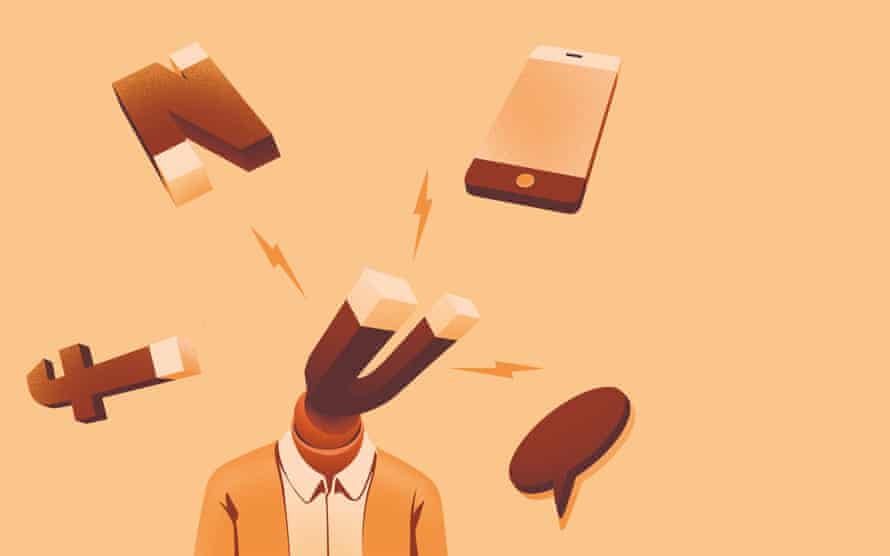
This tin sound a bit abstract – but I met people who were putting information technology into practice in many places. To give one example: there is strong scientific evidence that stress and exhaustion ruin your attention. Today, about 35% of workers feel they tin never switch off their phones because their boss might email them at any fourth dimension of solar day or night. In France, ordinary workers decided this was intolerable and pressured their government for change – so now, they have a legal "correct to disconnect". Information technology'southward uncomplicated. You have a right to divers work hours, and you accept a right to not be contacted past your employer exterior those hours. Companies that break the rules get huge fines. There are lots of potential commonage changes like this that tin can restore part of our focus. We could, for example, force social media companies to abandon their current business model, which is specifically designed to invade our attending in order to go on us scrolling. In that location are culling ways these sites could piece of work – ones that would heal our attention instead of hacking it.
Some scientists say these worries most attention are a moral panic, comparable to the anxieties in the by virtually comic books or rap music, and that the evidence is shaky. Other scientists say the evidence is potent and these anxieties are like the early warnings about the obesity epidemic or the climate crisis in the 1970s. I think that given this dubiety, nosotros can't wait for perfect evidence. We have to act based on a reasonable assessment of risk. If the people alarm about the effects on our attention turn out to exist incorrect, and we all the same practice what they propose, what will exist the price? We volition spend less time existence harassed by our bosses, and we'll be tracked and manipulated less by technology – forth with lots of other improvements in our lives that are desirable in any example. Merely if they turn out to be right, and we don't do what they say, what's the cost? We volition take – as the former Google engineer Tristan Harris told me – downgraded humanity, stripping us of our attention at the very time when we confront large collective crises that crave it more than always.
Merely none of these changes volition happen unless we fight for them. Only every bit the feminist movement reclaimed women's right to their own bodies (and notwithstanding has to fight for it today), I believe nosotros now demand an attention movement to reclaim our minds. I believe we need to act urgently, because this may be like the climate crisis, or the obesity crisis – the longer we wait, the harder it will go. The more our attention degrades, the harder it will be to summon the personal and political energy to accept on the forces stealing our focus. The first footstep it requires is a shift in our consciousness. We need to stop blaming ourselves, or making only demands for tiny tweaks from our employers and from tech companies. We own our own minds – and together, nosotros can have them back from the forces that are stealing them.
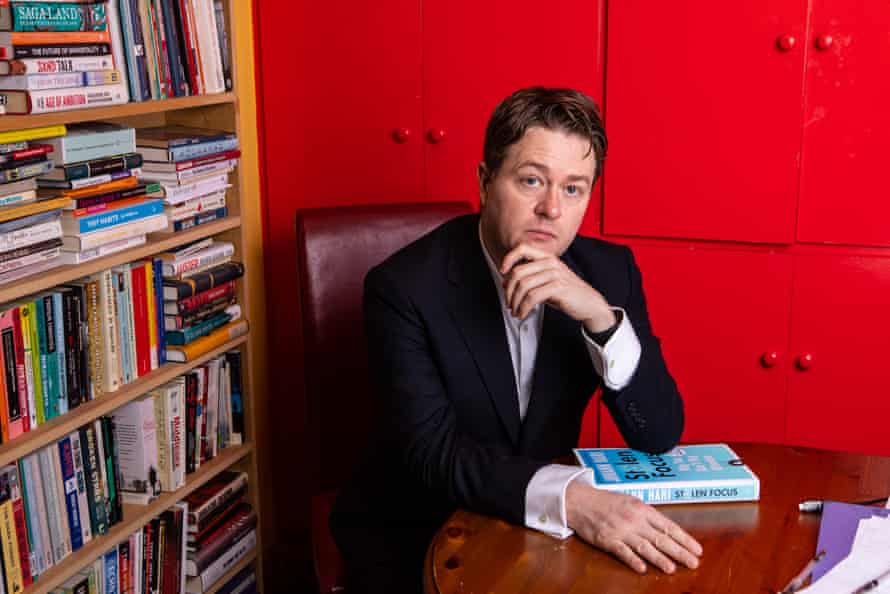
The above is an edited extract from Stolen Focus: Why You lot Can't Pay Attending by Johann Hari, published past Bloomsbury on half dozen Jan. To support the Guardian and Observer order your copy at guardianbookshop.com. Delivery charges may apply
This article was amended on 7 March 2022 to include reference to Prof Barbara Demeneix's area of scientific study.
Source: https://www.theguardian.com/science/2022/jan/02/attention-span-focus-screens-apps-smartphones-social-media
0 Response to "Stealing Your Mind as You Look at Your Phone Art"
Postar um comentário